EV Connector & Plug Guide India
Understand every electric vehicle charging port standard across 2-wheelers, 4-wheelers, and commercial fleets in India — with pinout diagrams, real pictures, power ratings, and vehicle compatibility.
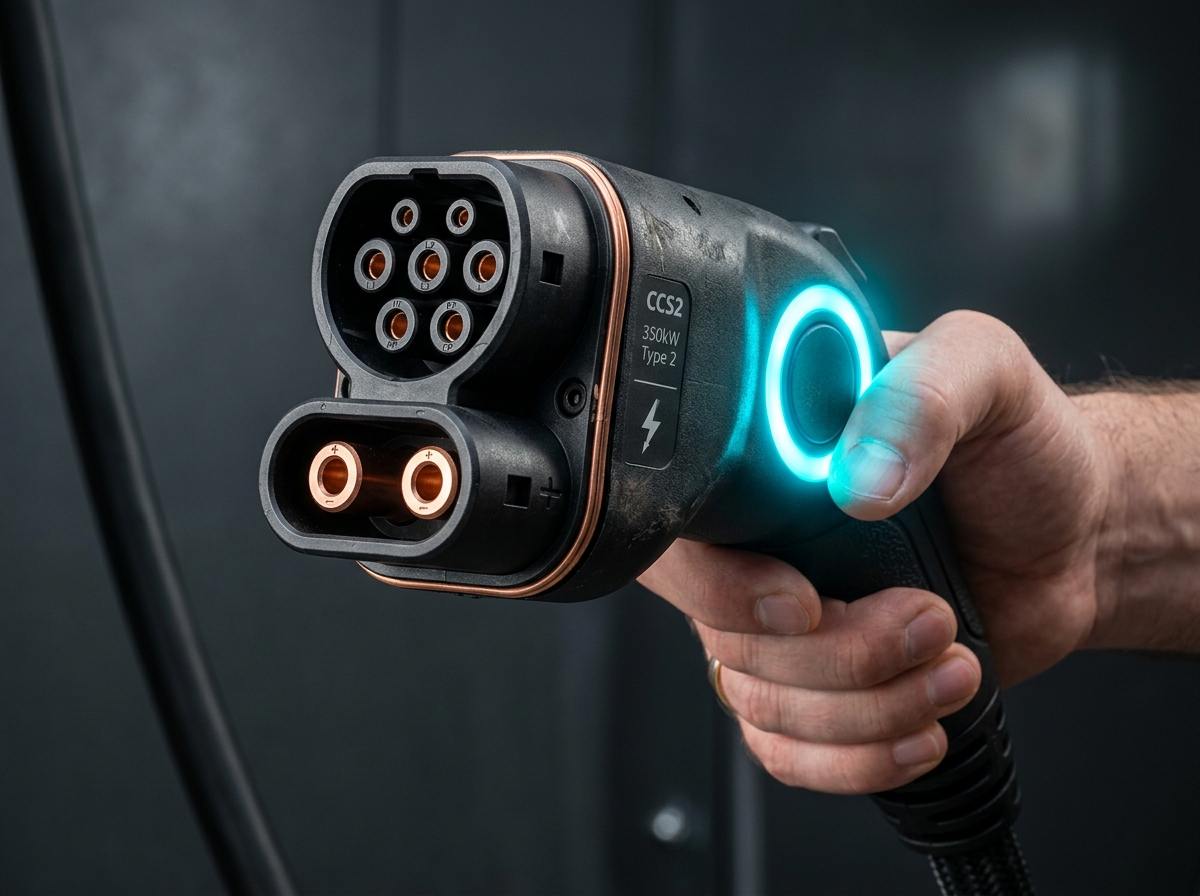
CCS Type 2 (Combined Charging System)
CCS2 / Combo 2
The official and most widespread DC Fast Charging standard in India for 4-wheelers and heavy commercial EVs. Combines the Type 2 AC socket with two dedicated high-power DC pins below.
- ✔Tata Nexon EV, Punch EV, Curvv EV, Harrier EV
- ✔Mahindra XUV400, BE.05, XEV 9e
- ✔MG ZS EV, Windsor EV, Cyberster
- + 4 more models
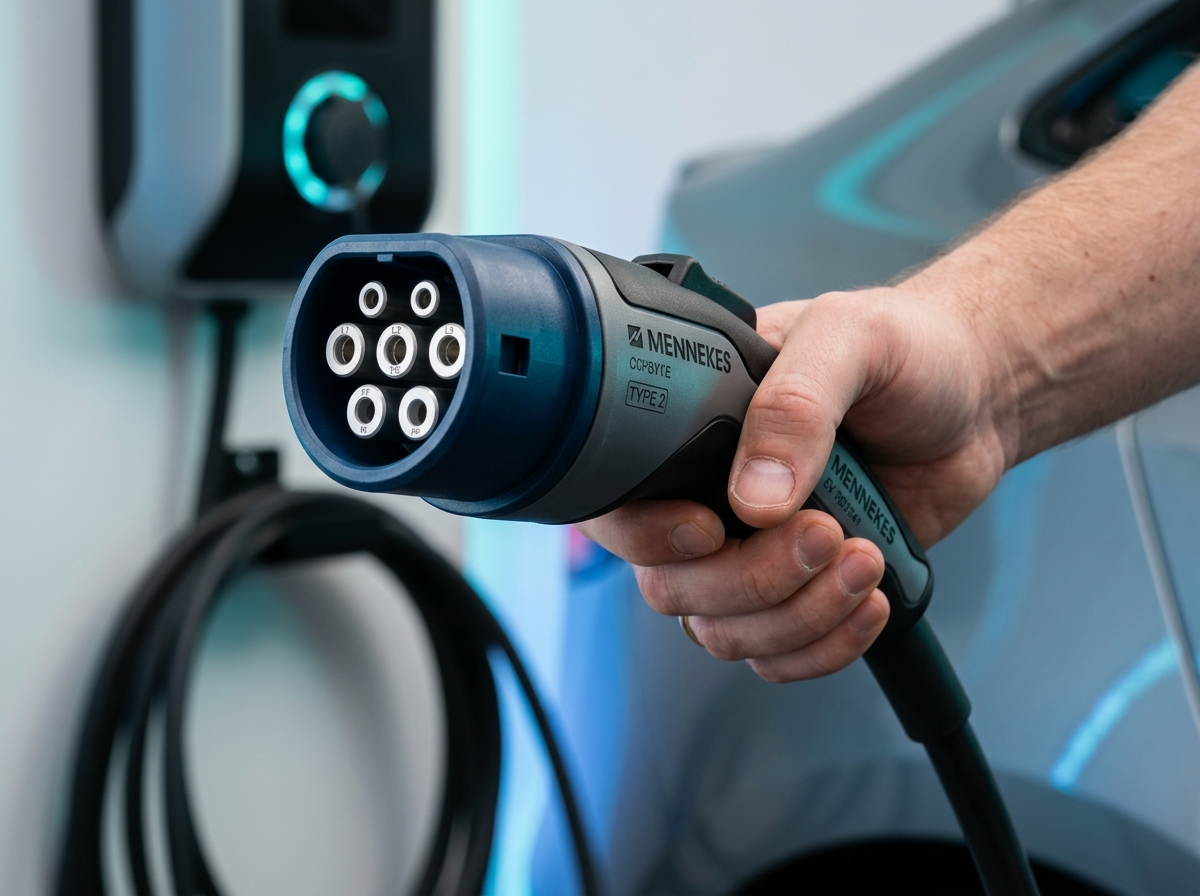
Type 2 AC (Mennekes)
IEC 62196-2 / Mennekes
The standard AC charging connector used across India and Europe for home wallbox chargers, workplace parking bays, hotel overnight hubs, and destination AC chargers.
- ✔All 4-wheeler EVs in India (Tata Tiago EV, Tigor EV, Punch EV, Nexon EV)
- ✔MG Comet EV, ZS EV, Windsor EV
- ✔Mahindra XUV400
- + 2 more models
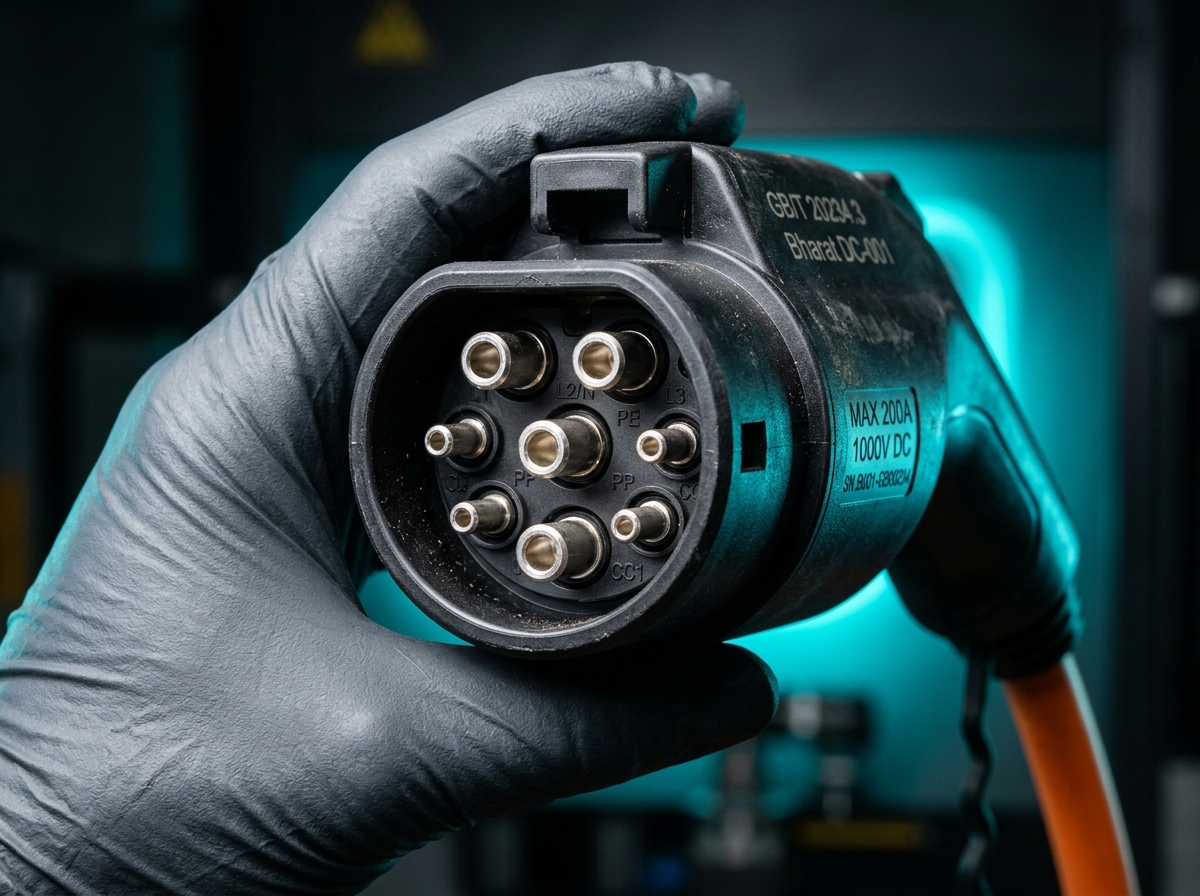
GB/T / Bharat DC-001
GB/T 20234.3 / AIS 138-2
Widely deployed under India's early FAME-I initiative and widely utilized for commercial fleet operations (BluSmart, Uber Green, EV cabs) and older generation Indian electric sedans.
- ✔Tata Tigor EV (Commercial / Fleet Express-T Edition)
- ✔Mahindra e-Verito, e2o Plus
- ✔Commercial electric logistics vans & intracity delivery vehicles
- + 1 more models
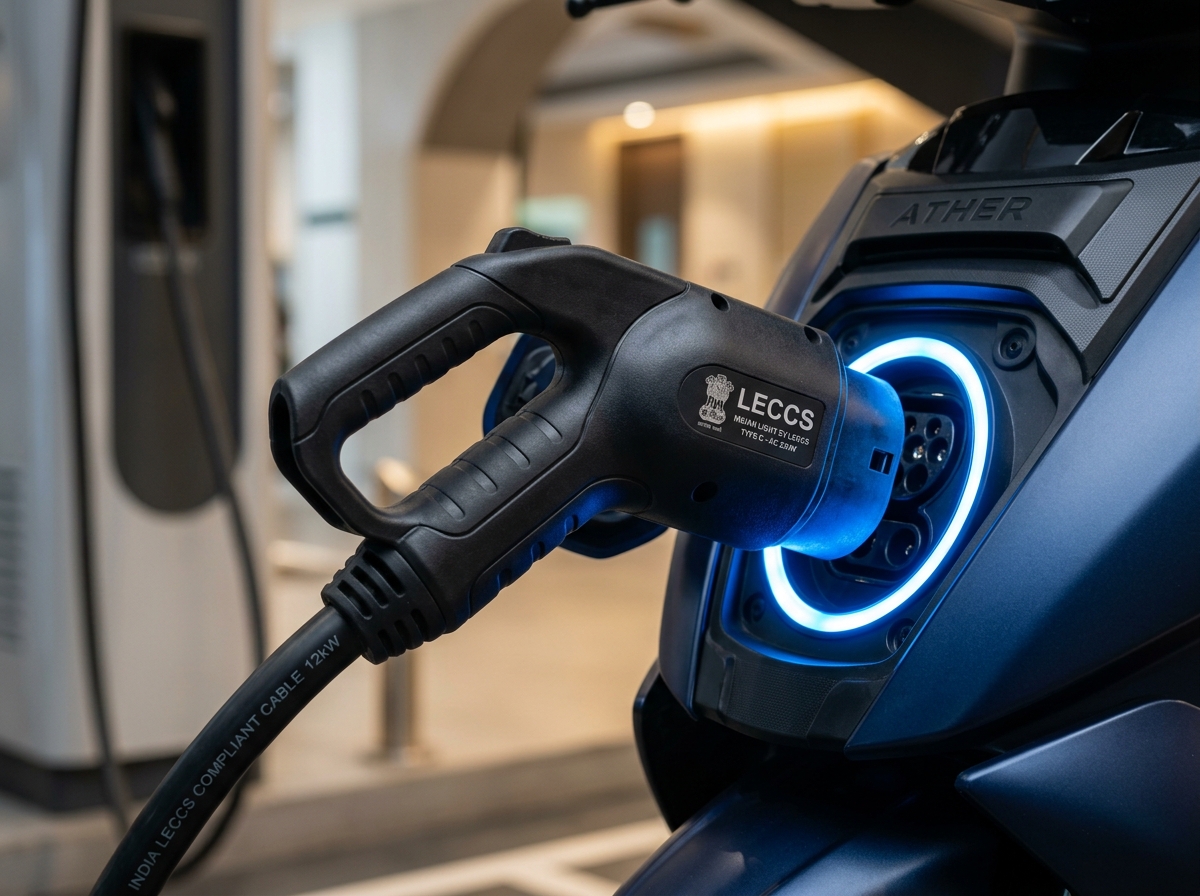
LECCS (Light Electric Vehicle CCS)
IS 17017 (Part 2 / Sec 7) / Ather Grid
India's groundbreaking indigenous standard recognized by the Bureau of Indian Standards (BIS) for 2-wheelers and 3-wheelers. Pioneered by Ather Energy and interoperable across Hero Vida and other leading 2W OEMs.
- ✔Ather 450X, 450S, 450 Apex, Ather Rizta
- ✔Hero Vida V1 Pro / V1 Plus
- ✔Upcoming Light 2W & 3W EVs adopting BIS standard
- + 1 more models
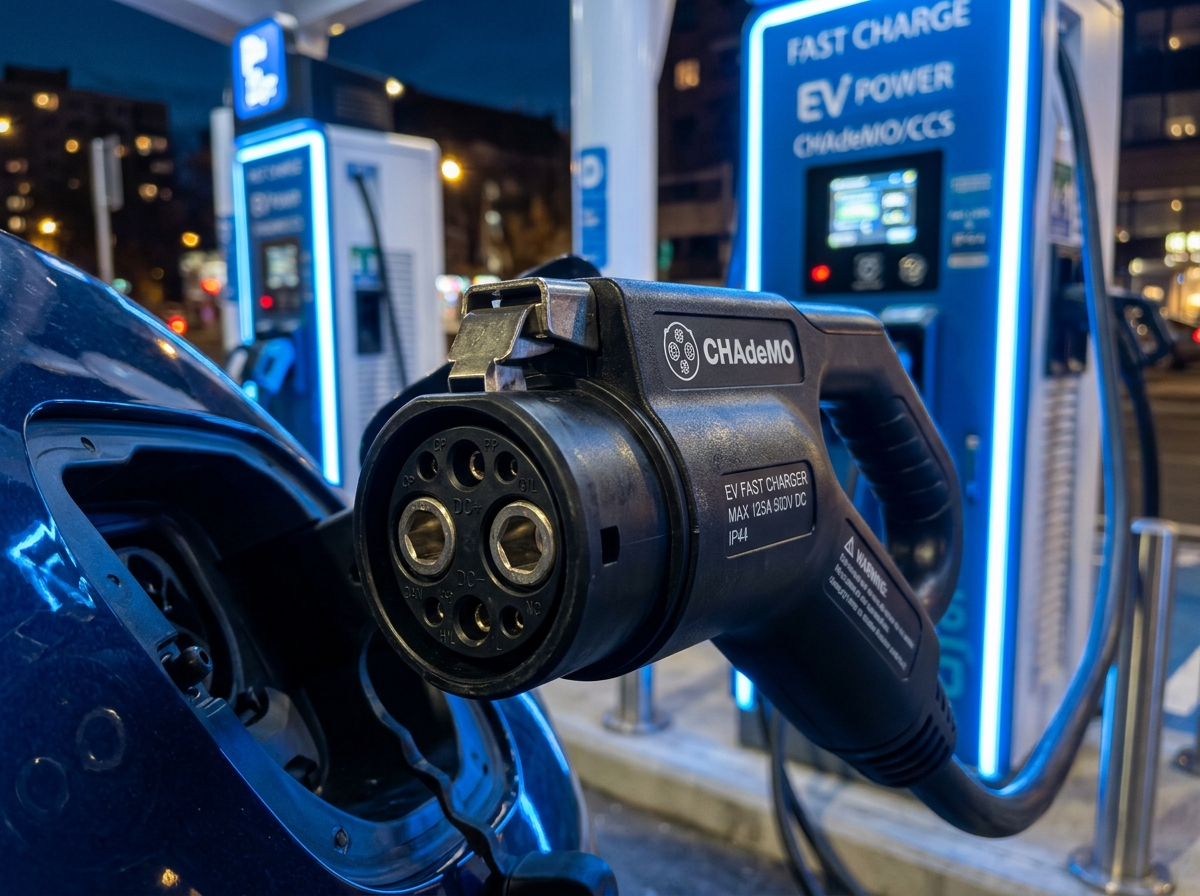
CHAdeMO Fast Connector
CHAdeMO 1.2 / 2.0 (JEVS G105)
The Japanese DC fast charging standard developed by Tokyo Electric Power Company. Found on tri-standard multi-gun public chargers alongside CCS2 and Type 2 across highways in India.
- ✔Nissan Leaf (Private imports / R&D units)
- ✔Mitsubishi Outlander PHEV
- ✔Older Japanese electric vehicle imports
- + 1 more models
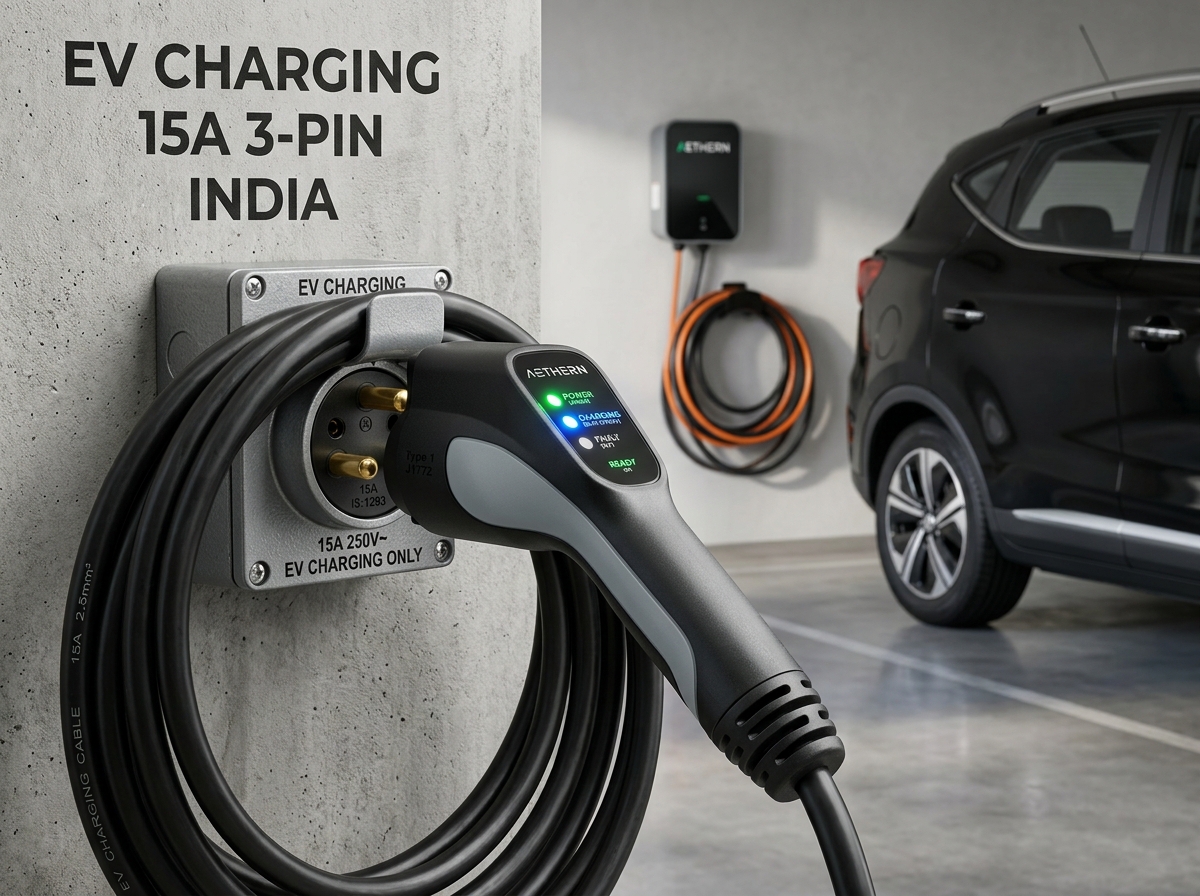
15A 3-Pin Wall Socket (Indian Standard)
IS 1293 (Type M / Type D Socket)
The universal heavy-duty 3-pin round wall socket found in every Indian home, office, parking lot, dhaba, and roadside hotel. Serves as the primary charging method for 2-wheelers and emergency lifeline for 4-wheelers.
- ✔All Indian electric two-wheelers (Ola S1, TVS iQube, Bajaj Chetak, Hero Electric, Revolt)
- ✔Electric 3-Wheelers & E-Rickshaws
- ✔Portable emergency trickle chargers included with all 4W EVs (Nexon EV, XUV400, MG, Hyundai, etc.)
- + 1 more models
EV Connector Comparison Matrix
Quick reference for Indian EV owners, commercial fleet drivers, and charging station installers.
| Connector Type | Power Type | Max Output | Charge Time (20-80%) | Primary Vehicle Segments | Find Live |
|---|---|---|---|---|---|
CCS Type 2 (Combined Charging System) CCS2 / Combo 2 | DC (Direct Current) | 350 kW | 18 – 45 mins (10% to 80%) | Tata Nexon EV, Punch EV, Curvv EV, Harrier EV | Search Stations → |
Type 2 AC (Mennekes) IEC 62196-2 / Mennekes | AC (Alternating Current) | 22 kW | 3 – 7 hours (0% to 100%) | All 4-wheeler EVs in India (Tata Tiago EV, Tigor EV, Punch EV, Nexon EV) | Search Stations → |
GB/T / Bharat DC-001 GB/T 20234.3 / AIS 138-2 | DC (Direct Current) | 60 kW | 45 – 75 mins (15 kW – 50 kW) | Tata Tigor EV (Commercial / Fleet Express-T Edition) | Search Stations → |
LECCS (Light Electric Vehicle CCS) IS 17017 (Part 2 / Sec 7) / Ather Grid | AC / DC Combined | 15 kW | 25 – 45 mins (0% to 80% on 2W battery) | Ather 450X, 450S, 450 Apex, Ather Rizta | Search Stations → |
CHAdeMO Fast Connector CHAdeMO 1.2 / 2.0 (JEVS G105) | DC (Direct Current) | 62.5 kW | 30 – 50 mins (10% to 80%) | Nissan Leaf (Private imports / R&D units) | Search Stations → |
15A 3-Pin Wall Socket (Indian Standard) IS 1293 (Type M / Type D Socket) | AC (Alternating Current) | 3.3 kW | 5 – 12 hours (Portable EVSE) | All Indian electric two-wheelers (Ola S1, TVS iQube, Bajaj Chetak, Hero Electric, Revolt) | Search Stations → |
❓ Which connector does my EV use?
Nearly all 4-wheeler EVs sold in India since 2021 (Tata Nexon/Punch/Curvv, Mahindra XUV400, MG ZS EV/Windsor, Hyundai, BYD) use the CCS2 standard for DC fast charging and Type 2 for home/destination AC charging. Electric 2-wheelers use either the BIS LECCS standard (Ather, Vida) or standard 15A home sockets (Ola, TVS, Chetak).
⚡ What is the difference between AC and DC charging?
AC Charging supplies alternating current to the vehicle's onboard charger (OBC), which converts it to DC to fill the battery (ideal for gentle overnight charging). DC Fast Charging bypasses the vehicle's onboard converter and pumps direct current straight into the high-voltage battery at up to 350 kW speeds.